
Ceramic Oud.
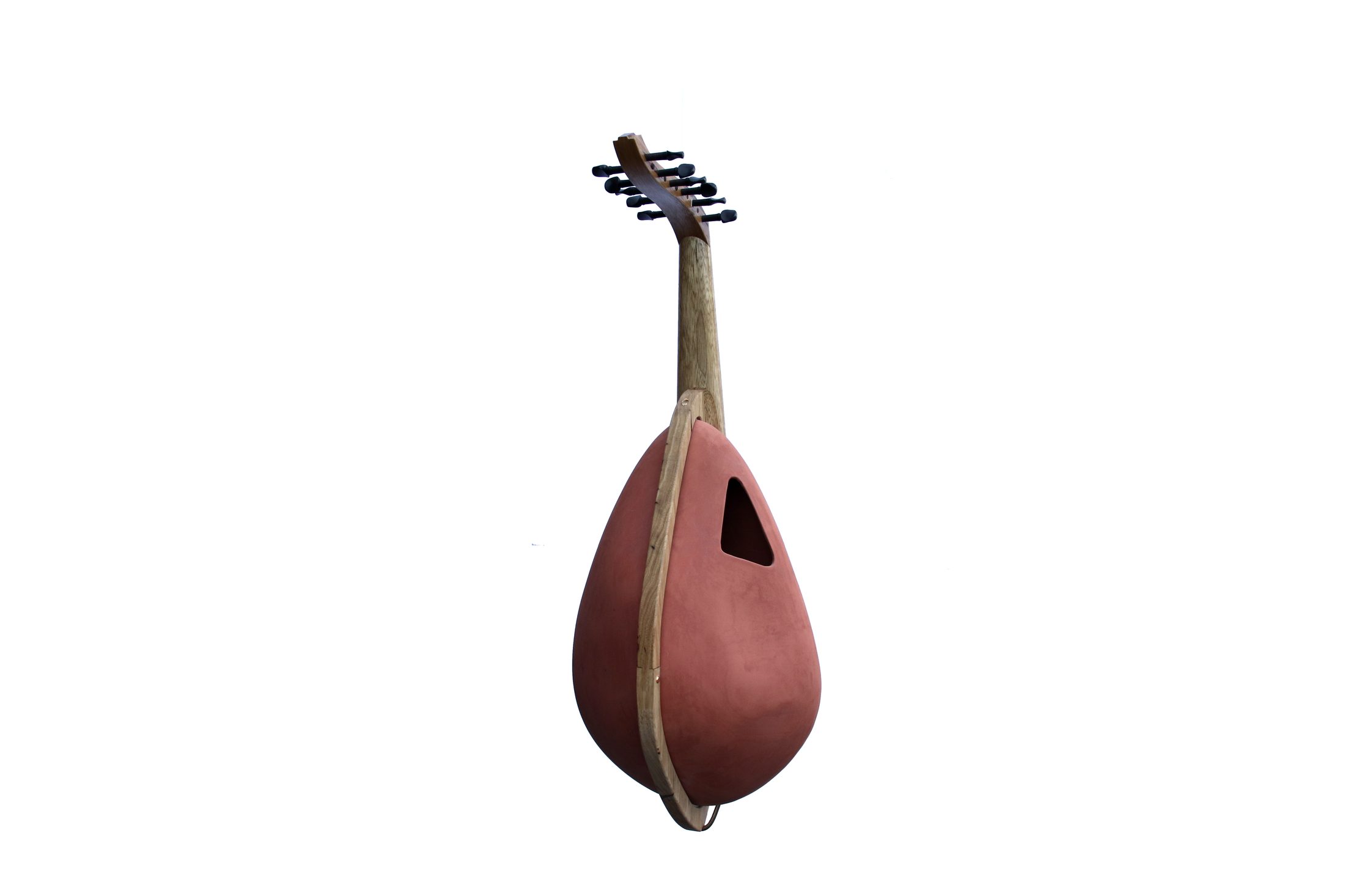
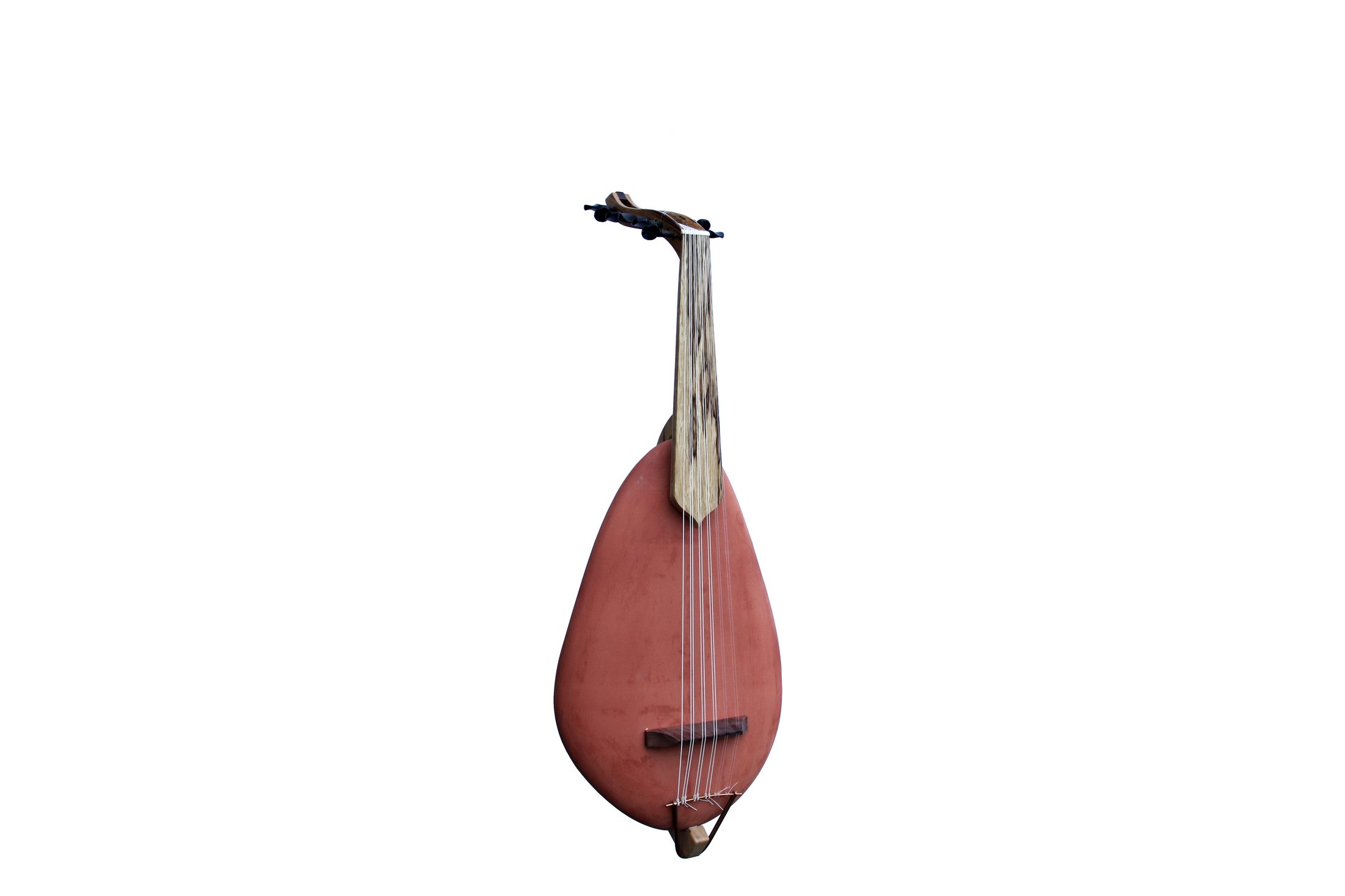
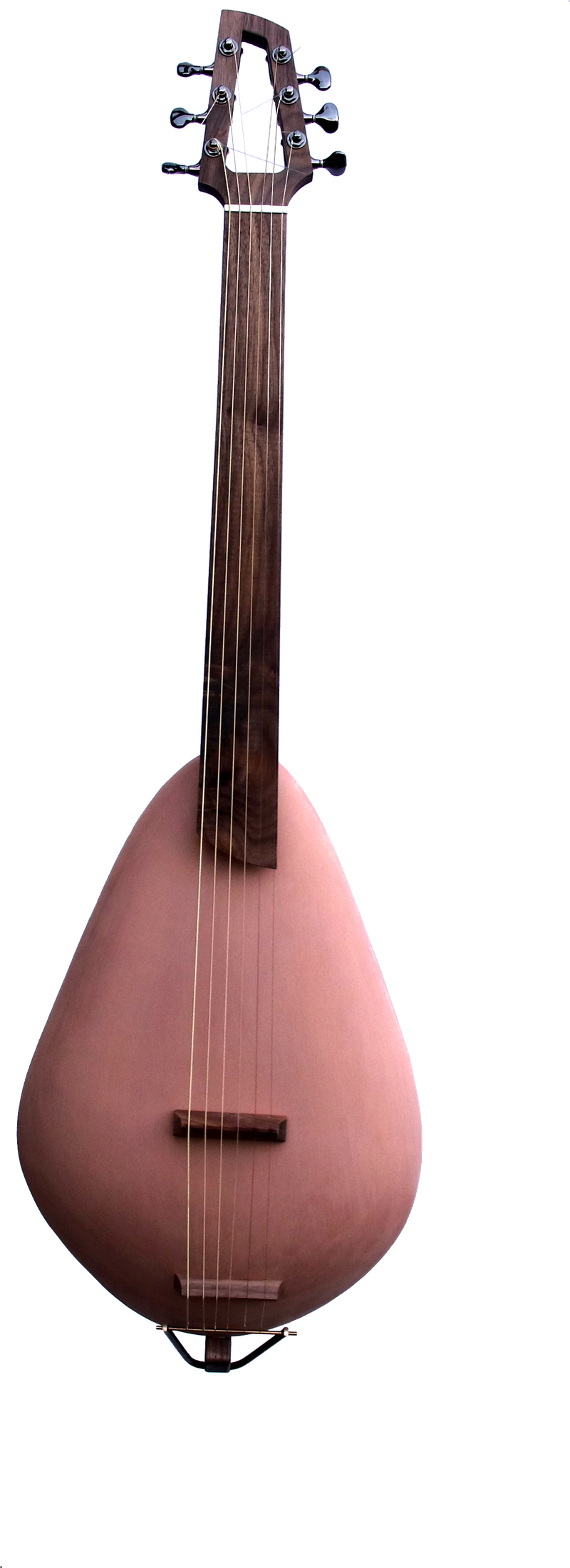
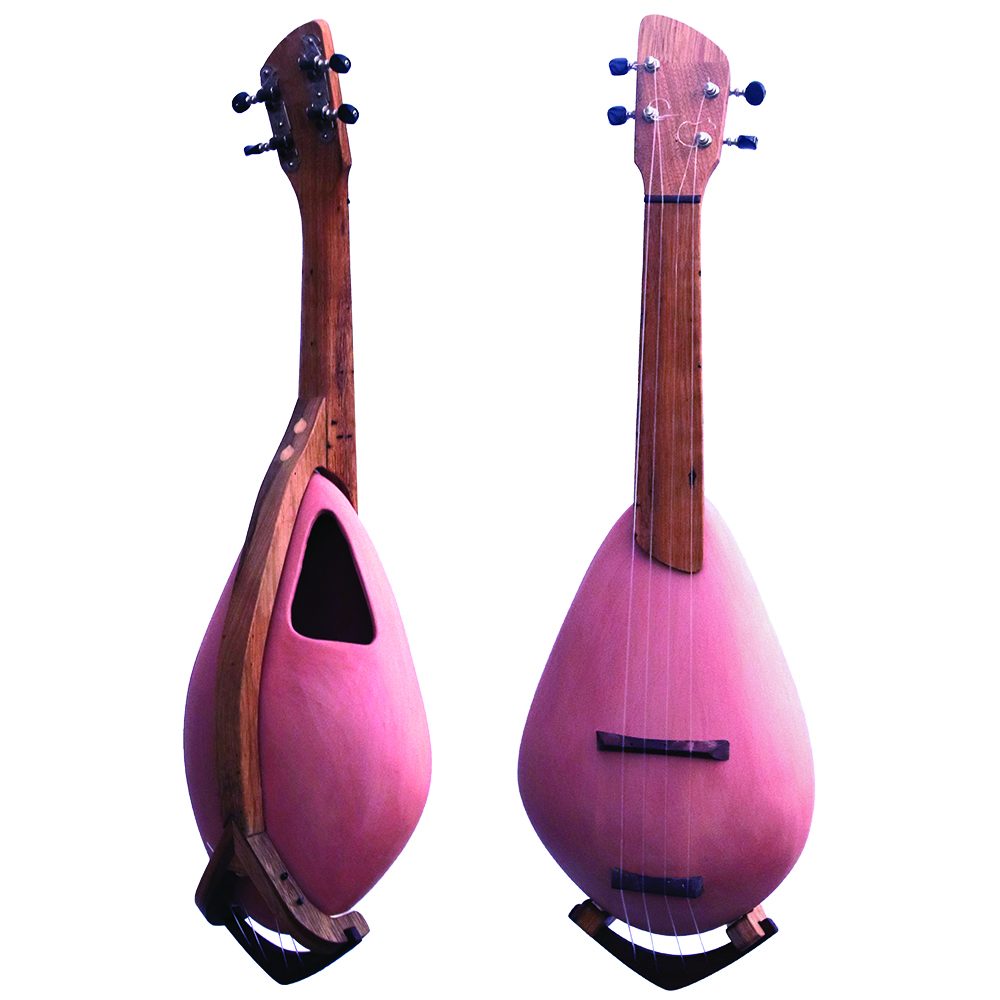
A rich tradition reinterpreted in earth. The single-throw terracotta bowl replaces the ribbed wood; the fretless walnut face is left exactly where the player's hand expects to find it.
An old voice the room hadn't heard for some time.
An oud is, traditionally, a ribbed bowl — many strips of bent wood meeting at a spine. The ceramic version is a single throw. The bowl is one piece. The continuous curve replaces the ribbed seam, and the silhouette is preserved while the construction is rewritten.
The face is walnut, fretless — as it always has been. The clay does not ask the player to reinvent technique. The fingers slide along wood, find the pitch, return; the bowl behind them does its quiet, different work.
The shape of the bowl matters more, here, than in the other two instruments. An oud is more bowl than face. The decision to leave the bowl as a single uninterrupted ceramic curve was the project's first decision — and almost its last. Every other choice followed from it.
[TBD — Amit's own words on the moment the bowl came off the wheel intact.]
Materials & making.
Single-throw, deeply rounded. Walls slow-fired for resonance. The traditional ribbed bowl is reduced to a continuous ceramic curve.
Short neck, broad fretless face. Hand-finished. Joins the bowl through a fitted ceramic shoulder, not glue.
Five double courses + one single bass. Tuning to the player's preference. [TBD — gauge / tuning preset]
Selected plates.
Make this oud yours.
Every instrument begins with a conversation. Together we choose the wood for the neck, the finish for the bowl, the colour, the texture — and where you'd like to play it. The studio sketches a proposal; ninety days from confirmation to your hands.
Begin a conversation.
Commissions, press, exhibitions, talks. I read every message myself. Reply within two working days.